
The Nordstrom Reset
How Nordstrom Escaped Wall Street, Avoided the Retail Private Equity Trap, and Became a High Stakes Test of Whether Patient Capital Can Save the Department Store Model

In the eighteen months before Nordstrom went private, Wall Street watched two of the most aggressive attempts to take over a major American department store collapse in real time. Arkhouse and Brigade chased Macy’s for nine months, lifted their bid three times to almost seven billion dollars, and walked away in July 2024 because they could not produce signed financing letters. Franchise Group spent the prior summer trying to buy Kohl’s, started at sixty dollars a share, cut their offer to fifty three after a single Fed hike, and Kohl’s terminated the talks because the financing was never definitive. Both buyers were classic financial sponsors. Both bid into department store real estate they hoped to refinance. Both failed at the same point in the deal, the moment when somebody had to actually wire the money.
Nordstrom closed.
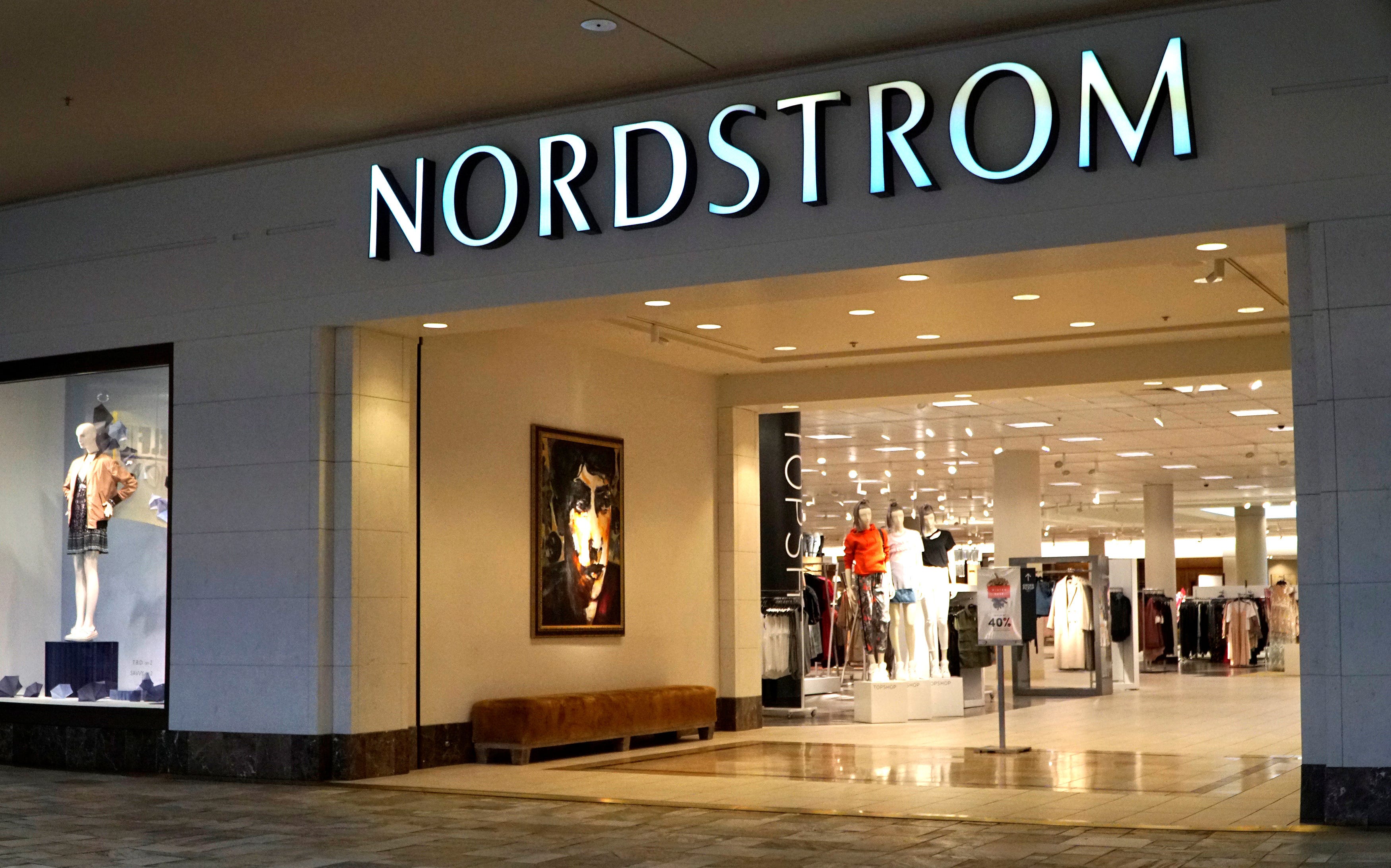
On May 20, 2025, after fourteen months of board negotiation, a special committee process, two shareholder lawsuits, and one denied preliminary injunction, the Nordstrom family and El Puerto de Liverpool together took one of the last great American department store names off the public markets at twenty four dollars and twenty five cents a share, an enterprise value of roughly six and a quarter billion dollars, and a forty two percent premium to the unaffected price. The thing nobody outside the deal seems to fully appreciate is how unusual the structure is. This is not a leveraged buyout. The Nordstrom family kept fifty point one percent and operating control. Liverpool, a Mexican retail dynasty controlled by the David, Bremer, and Guichard families since 1847, took forty nine point nine percent and three board seats. Net leverage at close sat between two and a half and two point eight times EBITDA, modest by retail standards, and the existing two point seven billion dollars of senior notes were upgraded into secured paper rather than subordinated. The real estate was deliberately excluded from the collateral package. There was no dividend recap. There was no sale leaseback. There was no five year exit clock.
Eleven months in, by the company’s first reported full year as a private company, revenue had climbed roughly seven percent to fifteen point nine billion dollars, finally clearing the 2019 peak, partly on the back of operational gains and partly because Saks Global filed for Chapter 11 on January 13, 2026 and effectively donated brand allocations and aspirational shoppers to the only multibrand luxury platform of scale still operating cleanly in the United States. The same Fortune piece that confirmed the topline noted, almost in passing, that the family currently has no intention of going public again. Pete Nordstrom’s exact phrasing was that he doubted it.
That is the simple version of the story. The more interesting version is what this deal actually represents, why every other recent retail take private failed, what Liverpool actually wants from a Seattle department store chain it has been quietly accumulating since 2022, and whether the structural margin gap that has dogged Nordstrom for a decade is something private ownership can fix or merely something it can outlast.
How the price got to twenty four twenty five
The number itself tells you something. Erik and Pete Nordstrom raised their formal interest in February 2024, which is when the special committee got formed. The unaffected stock price, the one the proxy treats as the clean reference for measuring premium, was seventeen dollars and six cents on March 18, 2024, the day before Reuters broke the story that the family was working on a take private. Six months of due diligence and a second potential bidder later, the family came back with an opening offer of twenty three dollars in early September. Three months after that, on the Sunday before Christmas 2024, the special committee pushed the price to twenty four twenty five and signed the merger agreement.
The premium math is worth slowing down on because it is the cleanest signal of where the public market thought Nordstrom was actually worth. Twenty four twenty five represented a forty two percent premium to the unaffected close, roughly thirty percent over the trailing thirty day VWAP, thirty seven percent over sixty days, and forty seven percent over ninety days. Centerview’s fairness work, run alongside Morgan Stanley’s, valued the company across five different methodologies and twenty four twenty five sat at the top of the implied trading comps range, in the upper half of the discounted cash flow range, and above the precedent transactions premium range. The implied multiple on management’s forward EBITDA worked out to four point nine times. For context, that is roughly half of what TJX trades at and well below where any of the off price names would change hands in a control transaction. The buyers got an attractive entry on absolute multiples, the public shareholders got a premium that beat almost every other recent take private bid in the sector, and the special committee got fairness opinions clean enough that even when a class action arrived in late March 2025 alleging breach of Washington’s anti takeover statute, the federal court denied the preliminary injunction and the deal closed on schedule.
The vote was not close. Ninety nine point four percent of voting shares said yes. More importantly, on the majority of minority test, the one that filters out the Nordstrom family’s own roughly thirty three percent rollover, ninety eight point seven percent of the unaffiliated voting public approved the price. That is the kind of number that tells you the public market was happy to be bought out. After three years of operating under the inventory mistakes of 2022, the Canada wind down, the credit card transition with TD, and the structural pressure on department stores, twenty four twenty five at a forty two percent premium was a clearing price the market accepted with very little resistance.
The capital structure that made it possible
The reason Nordstrom closed when Macy’s and Kohl’s did not is buried in a section of the proxy that retail journalists mostly skipped. Liverpool committed up to one billion seven hundred and twelve million dollars in cash. Roughly half of that sat as fresh equity. The other half was structured as a parent loan, a kind of intercompany debt instrument that can be equitized later if the operating company needs the cushion. The Nordstrom family rolled their existing thirty three percent stake. Liverpool rolled the nine point nine percent it had been quietly building since September 2022, when it paid roughly two hundred and ninety four million dollars to take an initial position. A new one point two billion dollar asset based revolving credit facility from Wells Fargo backstopped working capital, with four hundred and fifty million drawn at close. And the existing senior notes, the two point seven billion of paper trading in the public markets through 2044, did not get subordinated. They got secured upward, with second lien on the ABL collateral and first lien on substantially everything else other than the real estate.
That last point is the one that matters most for understanding why this deal looks nothing like the retail LBOs of the past decade. In a typical sponsor backed take private, legacy bondholders watch their unsecured paper get pushed down the priority stack as new secured debt sits above them, the bonds trade off, and the operating company starts the long slow work of trying to grow its way back to investment grade. Nordstrom’s noteholders woke up after the deal with better collateral than they had before. The company’s real estate, the most valuable asset on the balance sheet for any department store, was deliberately walled off from the financing entirely. Liverpool and the family preserved every option for future monetization without giving anything to the lenders today. Total debt at close sat around three point one five billion. Net debt was somewhere between two and two and a half billion. Against the company’s roughly one point one billion in adjusted EBITDA for the trailing year, that put net leverage in the two and a half to two point eight times range. For comparison, Sycamore took Belk to over four times in 2015 and the company filed for Chapter 11 within six years. HBC took Saks Global past five times in December 2024 and filed thirteen months later. J.Crew under TPG and Leonard Green did a seven hundred and eighty seven million dollar dividend recap that effectively stripped the equity, and the company entered Chapter 11 in May 2020.
Nordstrom did the opposite of all of that. Strategic plus family, modest leverage, real estate untouched, legacy paper upgraded, indefinite hold. That is the entire reason this transaction worked when nothing else in the sector has.
Liverpool, the silent partner most Americans have never heard of
It is hard to overstate how unusual Liverpool’s profile is for a foreign retail buyer of an iconic American brand. El Puerto de Liverpool was founded in 1847 by a French immigrant who began importing fabrics through the port of Liverpool to Mexico City, which is where the name comes from. It is older than Nordstrom by thirty three years. It has been controlled by the same three intermarried Mexican families, the David, Bremer, and Guichard clans, for the entirety of its existence, with Max David Michel and Graciano Guichard the most prominent operating principals today. The company today operates roughly one hundred and twenty five Liverpool premium department stores across Mexico, almost two hundred Suburbia value format stores acquired from Walmart de México in 2016, twenty eight or twenty nine Galerías shopping centers it owns and operates, around one hundred and thirty five franchise boutiques for brands like GAP, Williams Sonoma, and Pottery Barn, a joint venture with Spain’s El Corte Inglés on the Sfera apparel banner, and a fifty percent stake in Unicomer, which itself runs over eleven hundred consumer electronics and credit retail locations across Latin America and the Caribbean. Liverpool’s market cap on the Mexican exchange sits around eight point four billion dollars. Its trailing twelve month revenue is roughly twelve billion. Its EBITDA margin runs between seventeen and twenty percent. Net debt to EBITDA is consistently below one times. The company has roughly seven point eight million proprietary credit card holders financing more than half of the parent retail business directly off its own balance sheet. E commerce penetration in Mexico runs around thirty three percent of retail sales. By any measure, this is a more financially conservative and operationally integrated company than Nordstrom itself.
The strategic logic for Liverpool is the part that most American coverage has gotten only half right. The convenient framing is that Liverpool wanted American exposure and Nordstrom was the available trophy. The more accurate framing, the one Erik Nordstrom himself almost gave away in a Women’s Wear Daily interview shortly after the deal, is that the relationship is not built on synergy. Erik’s exact words were that there was nothing about the relationship that required synergies and things to happen in a collaborative way across the businesses. That is not how acquirers usually talk about their new investments. It is how a long horizon strategic capital partner talks. Liverpool is treating Nordstrom the way it has treated Unicomer, where it has held a fifty percent stake for over twenty years without integrating operations, and the way it treats its franchise relationships with American specialty retailers, where it operates the brands inside Mexico without trying to absorb the parent. The integration playbook here is patience. The capital is patient. The horizon is generational. There is no LP base demanding a return event.
What Liverpool actually contributes is balance sheet credibility, USMCA aligned sourcing optionality, deep institutional knowledge of how proprietary credit card businesses generate retail margin, an operating template for owning the real estate underneath your stores, and a private label penetration model at Suburbia that runs much higher than anything Nordstrom currently does. Whether any of that translates into Nordstrom in a meaningful way over the next five years is the open question. The answer the principals are giving today is that they are not in any hurry to find out.
The financial picture going in
To assess what Nordstrom looks like as a private company, you have to start with what it looked like as a public one in its final year. Total net sales in the fiscal year ended February 1, 2025 came to fourteen point five six billion dollars, up roughly two point four percent over the prior year on a comparable fifty two week basis. Strip the noise out of the segment splits and the picture is clear. The full line Nordstrom banner generated nine point three nine billion dollars in sales, which was effectively flat to slightly down. Nordstrom Rack generated five point one seven billion, up eight percent. Comparable sales for the full company were positive three point six percent, with full line up three percent and Rack up four point seven percent. Adjusted EBITDA for the year was about one point one billion dollars, an adjusted margin of seven point six percent. Operating cash flow was twelve hundred and sixty seven million, helped by a working capital benefit from the amended TD credit card agreement. Free cash flow was seven hundred and forty seven million. Long term debt sat at two point six billion. Cash at year end was just over a billion.
Step one notch above the line items and the picture sharpens further. Rack drove every dollar of growth. The full line banner has been operating in slow secular decline, masked in some years by store closures and in others by Canada exit accounting. Gross margin expanded almost three hundred basis points in the fourth quarter alone, which is the kind of merchandise margin recovery you only get when you have flushed inventory cleanly and the consumer is leaning into your assortment. That fourth quarter was the strongest the company had seen in years and is almost certainly the operating data that gave the special committee the confidence to put twenty four twenty five on the table.
The structural problem is the margin gap, and it does not go away just because you go private. Nordstrom’s seven point six percent adjusted EBITDA margin is the lowest in the relevant peer set excluding distressed Saks Global. Macy’s runs around eight point six percent. Dillard’s runs around sixteen, although Dillard’s is a different model and runs net cash. TJX runs eleven point six percent on a pretax basis. Ross Stores runs over twelve. Burlington runs around ten. Off price players generate roughly sixty percent more margin per dollar of sales than Nordstrom does, and they are the format that has been winning the trade down customer for the past five years. The problem private ownership solves is the quarterly capital markets pressure. The problem it does not solve is the unit economics gap.
Why Rack matters more than the headline tells you
Of all the line items on Nordstrom’s segment table, the most important one is the Rack store count. The company opened nineteen new Rack stores in 2023, twenty three in 2024, around twenty two in 2025, and has signaled twenty three more for 2026. That is the highest sustained new unit cadence in the company’s history. Rack now represents thirty five percent of total Nordstrom Inc revenue, up from thirty two percent two years earlier, and is on a trajectory to cross forty percent within five years if current trends hold.
Rack matters for three reasons most analyst coverage gets only partly right. First, it captures trade down, which is the dominant retail consumer behavior of the post inflation cycle. Anybody who used to spend twelve hundred dollars at Nordstrom on a monthly fashion run is more likely to spend that money split across two trips to Rack and a trip to Marshalls than they are to keep buying full price. Rack participates in that flow directly while the full line banner can only watch the dollars walk out the door. Second, Erik Nordstrom has called Rack the single biggest customer acquisition channel for the entire Nordstrom Inc ecosystem. Roughly forty percent of new customers across all Nordstrom banners enter through a Rack store, and a meaningful subset of those eventually cross over into full price purchases. Rack is the funnel. Full line is the conversion event. Without Rack, Nordstrom would have no replenishment mechanism for the full line customer base, which is itself aging and slowly contracting. Third, and least appreciated, Rack is being built on open air strip center real estate using exactly the same playbook TJ Maxx, Marshalls, Ross, and Burlington have used to compound store productivity for two decades. The new Rack boxes average around twenty seven thousand square feet, sit next to grocers and Dick’s stores in suburban power centers, and pay back capital quickly enough that the company has been comfortable accelerating openings even through a high interest rate environment.
The honest assessment is that Rack is good but not yet great. Average sales per store run around nineteen million dollars, ahead of Ross and Burlington but behind TJ Maxx and Marshalls, and the implied operating margin is materially below the off price peer set because Nordstrom Rack lacks the buying scale that TJX and Ross have built across thousands of stores. Two hundred and seventy seven Racks against TJX’s roughly thirty four hundred US doors is not a fair fight on procurement. The question for the next five years is whether Rack can compound store growth at twenty plus per year, hold mid single digit comp growth, and slowly close the productivity and margin gap. Liverpool’s involvement on supply chain and procurement is one of the few places where genuine synergy could move the needle, although neither side has so far publicly committed to that direction.
The full line problem nobody fully wants to talk about
Walk into the Nordstrom flagship at Columbus Circle in Manhattan on a Tuesday afternoon. The store is enormous, three hundred and twenty thousand square feet across seven floors, beautifully merchandised, almost completely staffed, and noticeably underpopulated. The store opened in October 2019, just five months before the pandemic, and has been recovering against a flagship retail environment that has shifted permanently. Tourism into Manhattan is at recovered but lower volumes than 2019. Office workers in the surrounding zip codes have not returned to their pre pandemic density. The store’s anchor demographic, the hybrid Manhattan luxury shopper splitting time between department stores and direct to consumer brand websites, is structurally smaller than the customer base Nordstrom underwrote when it greenlit the project in 2014. The company has never publicly disclosed the specific unit economics, has not taken a publicly disclosed impairment on the asset, and has never directly addressed analyst questions about whether the flagship is generating returns above cost of capital. Reading between the lines of every quarterly call from 2020 through the take private, it almost certainly is not.
The flagship is a metaphor for the full line problem more broadly. Department store sales in the United States peaked at roughly two hundred and thirty billion dollars in the early 2000s and sit around one hundred and thirty three billion today. The category has lost over forty percent of its real spending power in two decades. The number of department stores in the country has dropped from about seventy nine hundred in 2015 to around five thousand today. The bifurcation between Class A malls, where Nordstrom’s stronger doors sit, and Class B and C malls, where Macy’s and Kohl’s are concentrated, has deepened every year since 2018. Coresight tracked over seven thousand store closures across all retail categories in 2024 and over eight thousand in 2025. Nordstrom has closed full line stores at Northshore Mall in Massachusetts, South Shore Plaza in Massachusetts, Galleria Dallas in Texas, and Christiana Mall in Delaware, the last of which represents a complete exit from the state. The full line store count peaked at one hundred and twenty two in 2019 and now sits at ninety two. That is roughly a twenty five percent reduction in the format over six years. The remaining base skews heavily toward A and A plus malls like NorthPark, Aventura, Bellevue, Mall of America, South Coast Plaza, Garden State Plaza, and Westfield Topanga. Those stores work. The problem is the ones that do not.
What rescues the full line story from being a pure decline narrative is beauty and luxury. Nordstrom’s beauty business runs at roughly twelve to thirteen percent of total company sales, which implies somewhere around one point eight billion dollars annually, and the company is consistently ranked first among prestige beauty retailers on customer experience, ahead of both Sephora and Ulta on the most recent Women’s Wear Daily ChangeUp survey. The luxury and designer business, while not formally disclosed, is concentrated in the top twenty five doors and runs an estimated fifteen to twenty percent of the full line banner. For 2026, the company’s one hundred and twenty fifth anniversary, Nordstrom secured exclusive collaborations with Chanel, Christian Louboutin, and Manolo Blahnik. That kind of brand commitment from the top of the luxury pyramid does not happen for a retailer the brands are walking away from. Saks Global’s Chapter 11 has, in practice, made Nordstrom and Bloomingdale’s the two largest stable wholesale partners for prestige luxury in the United States. The brands need somewhere to clear inventory. Nordstrom is the place.
Where Nordstrom sits in the competitive map
The cleanest way to think about Nordstrom’s competitive position is as the only operationally stable multibrand luxury platform of scale in the country. Above Nordstrom on the price ladder sits true luxury, where Saks Global is now in court, Neiman Marcus has been folded into the same restructuring, and Bergdorf Goodman is being explored for a partial stake sale. The category is wounded. Below Nordstrom sits aspirational mid market, where Macy’s is executing the Bold New Chapter restructuring with reasonable competence and Bloomingdale’s is the most direct competitor for Nordstrom’s bridge luxury customer. Sideways from Nordstrom sit the off price winners, TJX, Ross, and Burlington, which have continued to compound store growth and operating margin every year. And below the entire department store stack sit direct to consumer luxury, Amazon Luxury, the resale platforms, and the assortment of brand owned flagships that have multiplied since the pandemic.
The pressure on Nordstrom is real but uneven. Saks Global’s collapse is unambiguously good for Nordstrom in the near term. Brand allocation dollars that would have flowed to Saks are flowing to Nordstrom and Bloomingdale’s. Aspirational customers who used to shop both Saks Fifth Avenue and Nordstrom now shop only Nordstrom. The Chanel and Louboutin anniversary collaborations would not have landed three years ago. Macy’s, having survived its own takeover attempt, is now focused on closing one hundred and fifty underproductive stores by the end of fiscal 2026 and growing Bloomingdale’s, which is a more credible threat to Nordstrom than the Macy’s banner ever was. Kohl’s, after a year of CEO dysfunction including the firing of Ashley Buchanan in April 2025 for cause over an undisclosed personal relationship, is no longer a meaningful competitor to Nordstrom for any customer Nordstrom actually wants. Dillard’s, the family controlled outperformer, runs sixteen percent EBITDA margins on six and a half billion in revenue and has appreciated over six hundred percent since January 2021, which is the strongest argument anyone could make for what family controlled, debt averse, no acquisition retail looks like when run well. Dillard’s is the silent benchmark for everything Nordstrom is now trying to become.
The off price gap is the most stubborn structural challenge. TJX continues to compound at five percent comp growth on a fifty six billion dollar revenue base. Ross continues to print twelve percent operating margins. Burlington has accelerated. Rack participates in the trade down tailwind but runs at roughly half the operating margin of its closest competitors and lacks the buying scale to close the gap quickly. The Nordstrom answer to this, implicit in the new store cadence, is that Rack does not need to match TJX on margin to be valuable, it just needs to keep growing the store base and capturing the trade down customer who is one income shock away from also being a trade up customer when the cycle turns. That is a defensible bet, but it is not a strategy that closes the structural margin gap on its own.
What Liverpool actually changes
Eleven months into private ownership is too early to evaluate strategy. It is not too early to look at what has actually changed and what has not. The leadership team is mostly stable. Erik and Pete Nordstrom are co CEOs. Jamie Nordstrom runs stores and merchandising. Cathy Smith left as CFO to take the same role at Starbucks and was replaced in July 2025 by Kelly Dilts, who came from a turnaround background at Dollar General. Yumi Shin, the former general merchandise manager at Bergdorf Goodman, joined as chief merchandising officer in 2025. The board went from twelve directors to seven, with three Nordstroms, three Liverpool representatives, and one independent. There has been no public reshuffle of the senior commercial team beyond planned retirements. There is no obvious sign of cultural turbulence post close, which for a company whose entire competitive moat is built on culture and customer service is the single most important data point.
On the operational side, the company has continued the closure of underperforming full line stores, accelerated Rack expansion, completed the credit card servicing transition to TD Bank, and begun the early stages of consolidating overlapping corporate functions. Layoffs to date have been targeted rather than wholesale, with roughly thirty six remote credit operations roles eliminated in February 2026 as part of the TD transition and around three hundred associates affected by the two Massachusetts store closures. Liverpool has not, so far, sent in waves of executives or imposed Suburbia private label percentages on the Nordstrom buying organization. The integration thesis, to the extent there is one, appears to be that Liverpool brings capital and patience and Nordstrom keeps running itself.
The early commercial signs are reasonable. Fortune reported in March 2026 that fiscal 2025 revenue grew approximately seven percent to fifteen point nine billion dollars, the first year exceeding the 2019 peak. Some of that is operational execution. Some of it is the share donation from a collapsing Saks Global. Some of it is the natural rebound of a company that had been operating under the cloud of a take private negotiation for fifteen months. Disentangling those three is impossible without segment level disclosure that the company is no longer obligated to provide. What you can say with confidence is that the early numbers do not look like a company in distress, the brand is intact, and the operating cadence has continued. Whether that translates into a structural margin recovery over three to five years, or whether Nordstrom remains a slow melting ice cube on a longer timeline with a more patient owner, is the central open question.
What the comparables actually tell us
Most of the recent retail private equity playbook ended badly. Toys R Us was taken private in 2005 by Bain, KKR, and Vornado for six and a half billion dollars at over eighty percent debt financing, paid out over four hundred million in fees to its sponsors over twelve years, filed for Chapter 11 in 2017, and liquidated in 2018. Mervyn’s was taken private in 2004 by Cerberus, Sun Capital, and Lubert Adler in a deal that split the operating company from the property company, stripped the real estate, and left Mervyn’s unable to pay rent on its own former buildings. The company liquidated in 2008. Belk under Sycamore went into a pre packaged Chapter 11 in 2021 and a second restructuring in 2024. J.Crew under TPG and Leonard Green took a seven hundred and eighty seven million dollar dividend recap in 2014, executed an intellectual property transfer trapdoor in 2017 that formed the basis of subsequent litigation, and filed for Chapter 11 in 2020. Payless ShoeSource was taken private in 2012, dividend recapped to four hundred million in debt, filed for Chapter 11 in 2017, filed again in 2019, and liquidated. Neiman Marcus was taken private in 2013 by Ares and CPPIB at six billion dollars, filed for Chapter 11 in 2020, eliminated four billion in debt, was sold to HBC for two and a half billion in 2024, and is now back in Chapter 11 inside Saks Global thirteen months later.
The pattern is consistent. The deals that failed had three common features: high leverage, real estate stripping, and dividend recaps. The deals that worked, Albertsons under Cerberus and Dollar General under KKR being the cleanest examples, had operating businesses with secular tailwinds, modest leverage relative to category cash generation, and held the asset long enough for the cycle to turn before exiting. Nordstrom’s structure looks much more like the second category than the first. Modest leverage, real estate untouched, no dividend recap, indefinite hold, family operating control. The closest sponsor analog you could find for what Liverpool is trying to do here would be the Berkshire Hathaway model, where capital sits indefinitely behind operating management with no forced exit and no operating interference. That is not how this is being marketed, but that is what the structure looks like.
The risk is not financial structure. The risk is execution. Operating a department store chain in slow secular decline through a tariff regime that was ruled unconstitutional by the Supreme Court in February 2026 only to be replaced by a Section 122 global tariff days later, while competing against off price players with superior unit economics, requires every operating quarter to compound correctly. The capital structure buys time. It does not buy results.
What is not yet knowable
There is a meaningful amount about Nordstrom’s first eighteen months as a private company that simply is not visible from outside the building. The banner level operating margin split between Rack and full line has never been disclosed and is the single most important data point for assessing whether Rack can carry the business. The actual unit economics of the Manhattan flagship have never been published. The post close fiscal 2025 segment split is not in the public record. The structure of any equity incentive plans for senior executives, which historically were tied to public stock performance, has not been disclosed. The substance of any strategic interactions with Liverpool on procurement, technology, sourcing, real estate, or credit cards has stayed inside both companies. Whether the family and Liverpool have established formal mechanisms for resolving disagreements between fifty point one and forty nine point nine percent partners is not public. Whether Liverpool’s stake is truly indefinite or whether there is a buy sell mechanism that could trigger under specific circumstances is not in the proxy beyond standard cooperation language.
What is visible is that the company is operating, the brand is healthy, the cash flow is sufficient to service the debt with substantial headroom, the largest competitor is in bankruptcy, and the management team has not changed. That is a defensible starting position. It is not a finished argument.
A balanced read for investors and operators
Three readings of Nordstrom are credible right now and the honest answer is that you cannot rule out any of them.
The optimistic reading is that Nordstrom has executed the cleanest structural take private in recent retail history, Liverpool is the patient strategic capital partner the company always needed, the family is now able to invest counter cyclically against a peer set that is either restructuring or distracted, the Saks Global collapse has handed Nordstrom three to five years of luxury share donation, Rack continues to compound at twenty plus stores per year with margin expansion potential as scale builds, and in five to seven years the company emerges as a more profitable, more focused, mid teens EBITDA margin retailer that either re lists at a substantial premium or stays private permanently as a cash compounding family asset. In this reading, Nordstrom looks more like Albertsons or Dollar General than like Belk or J.Crew.
The cautious reading is that going private buys Nordstrom time but does not change the underlying category dynamics, the seven point six percent EBITDA margin gap to off price peers is a structural problem that operating focus alone cannot close, the full line banner continues to slowly decline as the customer base ages and the digital natives capture share, Rack grows but does not achieve TJX style operating leverage, the Saks Global share donation is a one time tailwind that fades by 2027, and Nordstrom emerges from this period as a stable but structurally lower margin business that is fine to own privately but would not command a premium re listing valuation. In this reading, Nordstrom looks like Dillard’s, which is a perfectly respectable outcome but a different one than what the take private premium implied.
The skeptical reading is that the same secular forces that have closed forty percent of American department stores over twenty years do not stop because the Nordstrom family wrote a check, the tariff regime adds pressure to apparel margins that no operator can fully offset, the off price players continue to take share from both sides of the trade down customer, beauty competition from Sephora at Kohl’s and Ulta at Target eventually compresses Nordstrom’s beauty margins, the luxury brands continue their direct to consumer migration and reduce wholesale across the board including Nordstrom, and at some point in the next decade the company faces the same kind of restructuring conversation Saks Global is currently having. In this reading, the patient capital structure delays but does not prevent the eventual category outcome.
What is striking is that all three readings are consistent with the data we have today. None of them can be falsified by the first eleven months of private ownership. The honest investor and operator response is to watch four things over the next eighteen months. First, whether Rack store openings continue at the twenty plus per year pace and whether comp growth holds. Second, whether full line same store sales stabilize or continue to decline in low single digits. Third, whether the company’s adjusted EBITDA margin moves up toward nine percent or stays anchored around seven and a half percent. Fourth, whether Liverpool starts to demonstrate concrete operational integration, particularly on procurement, private label, or credit card economics, or whether the relationship continues to be characterized as collaborative and learning based without specific synergy disclosure.
The deal itself was a remarkable achievement. The Nordstrom family and Liverpool together did something that nobody else in American retail has managed in this cycle, which is to take a major department store private with a capital structure that prioritizes long term operational flexibility over short term financial engineering. Whether that structural advantage translates into operating outperformance is a question the next five years will answer.
The capital structure buys time. Time is necessary. It is not sufficient.
Found this valuable, do share it ahead!